La Tessitruce · 6 series
Works
Click an image to enlarge it
01
Archive of errors
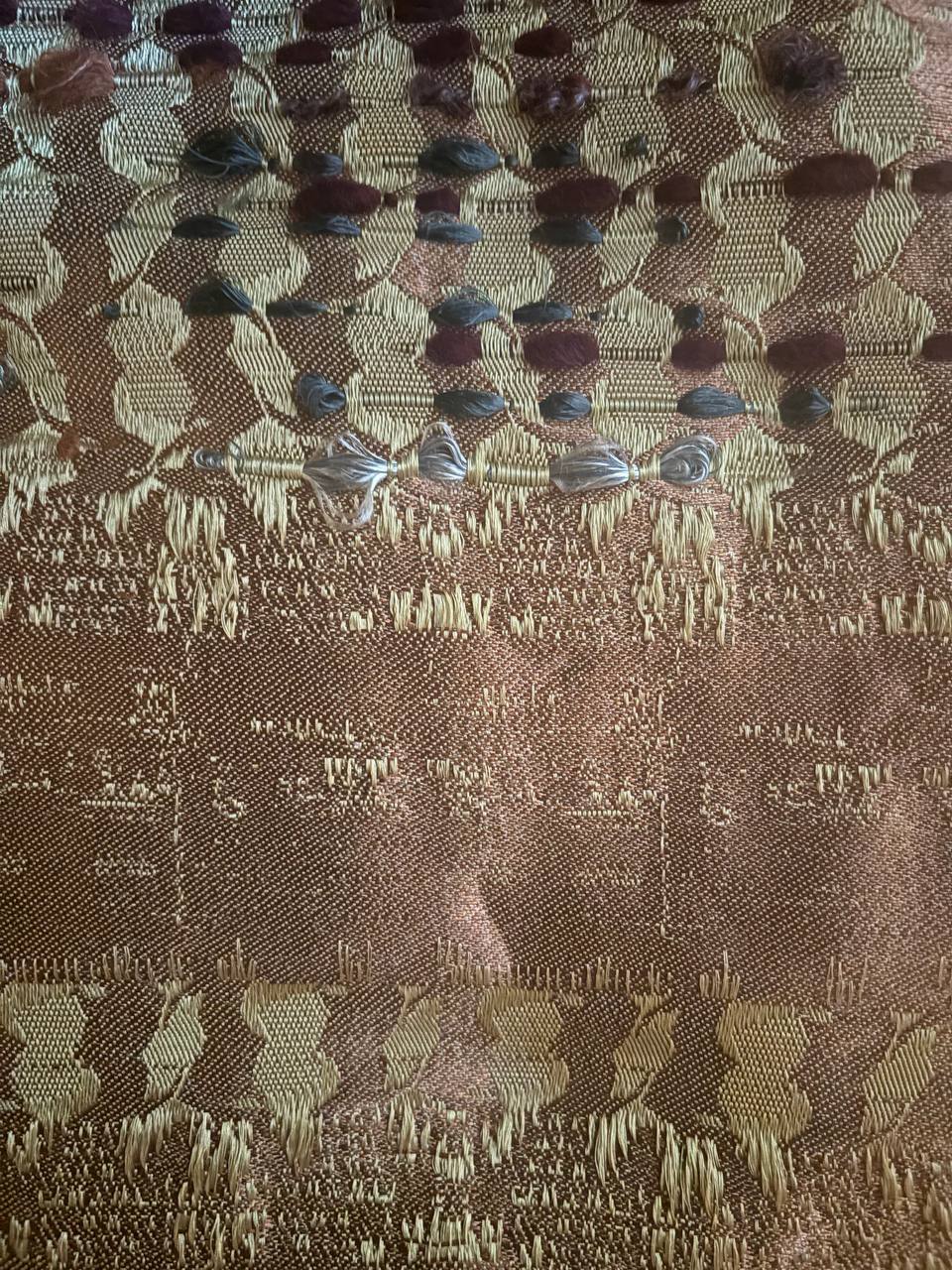
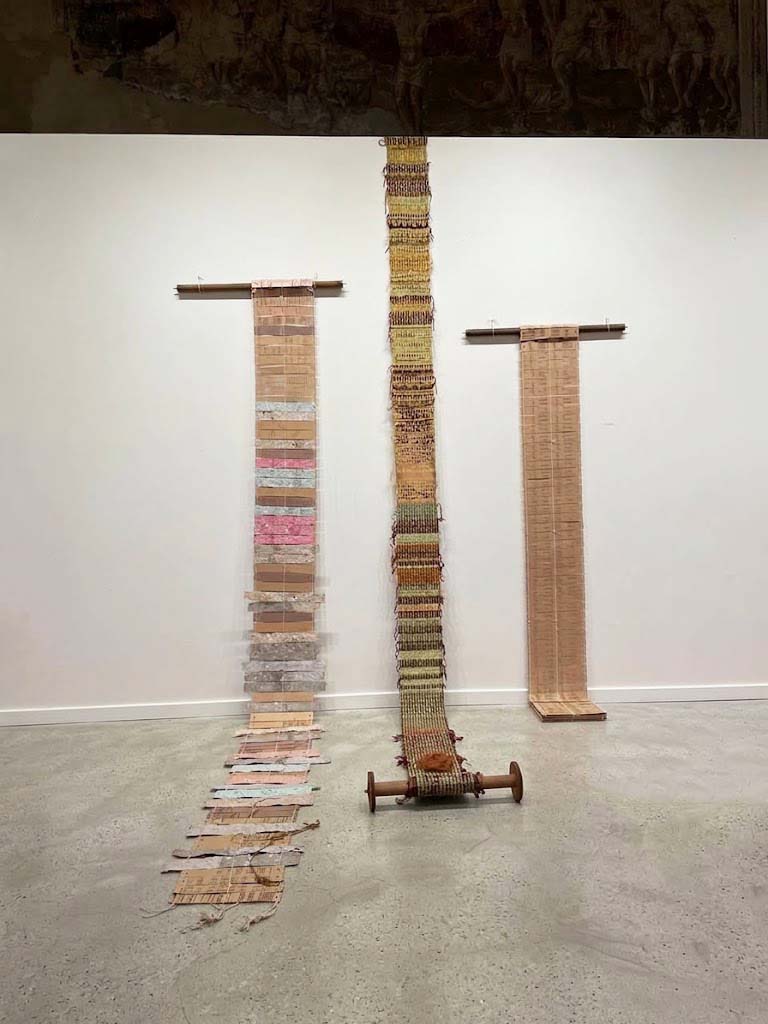
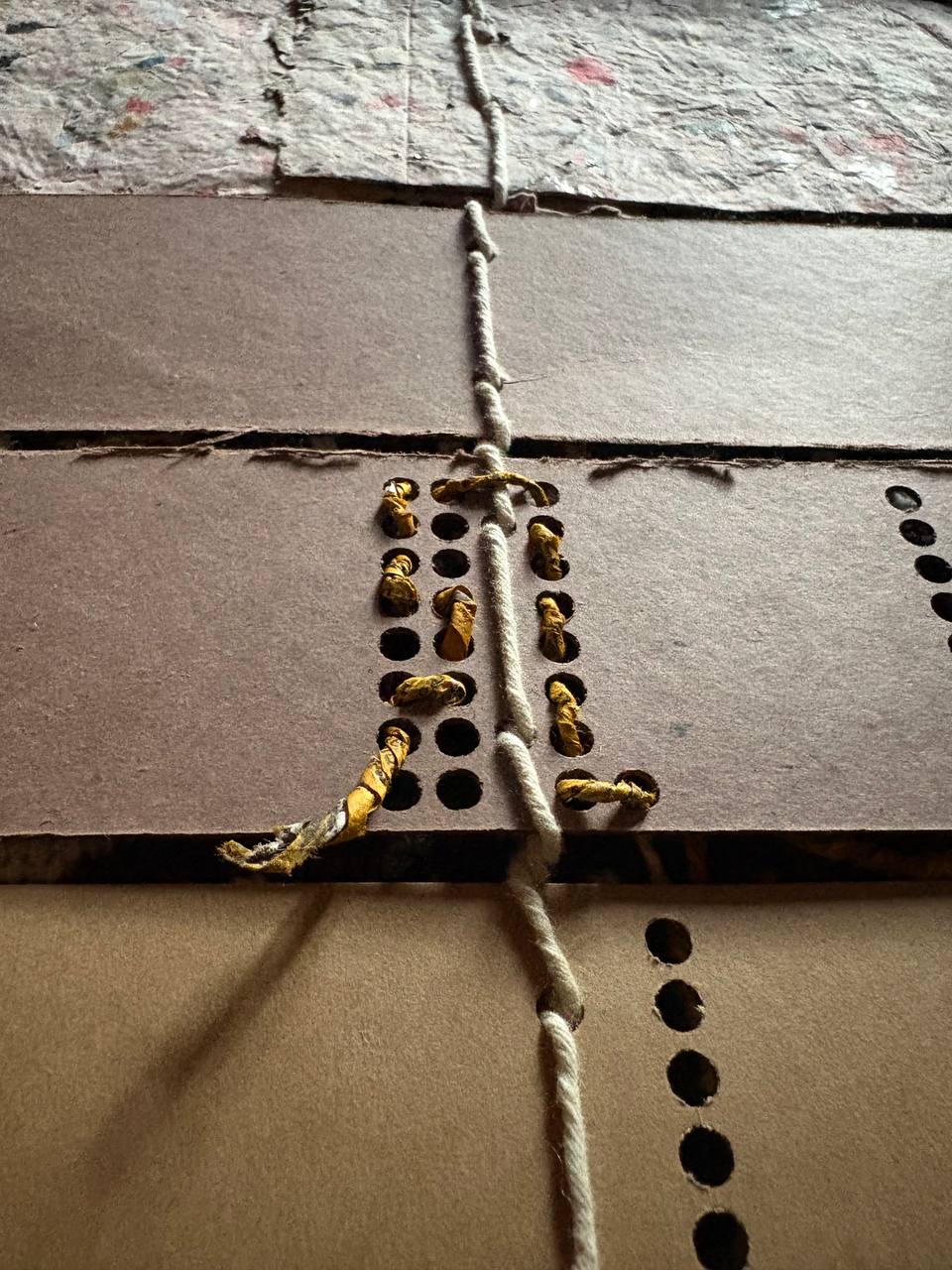
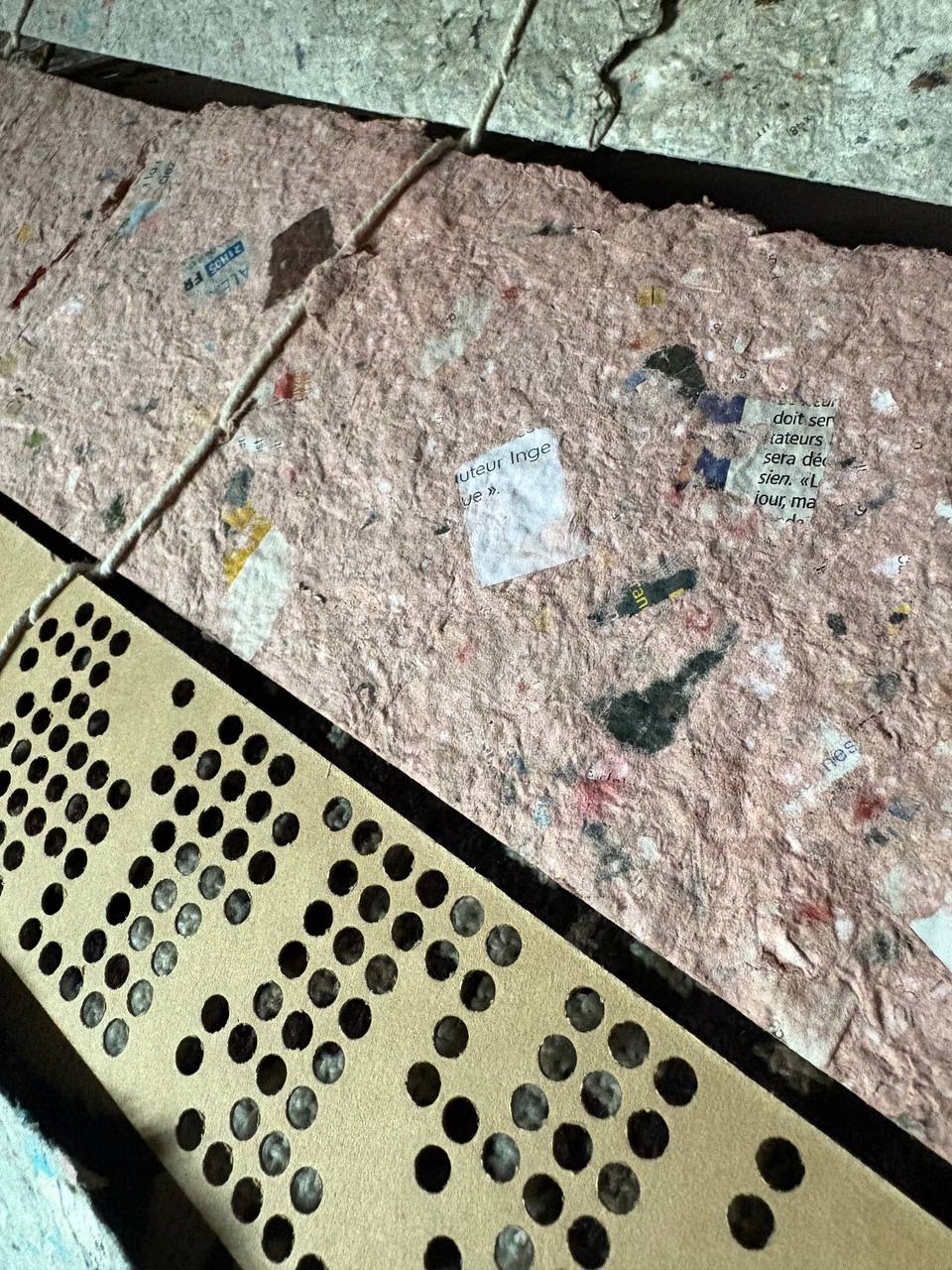
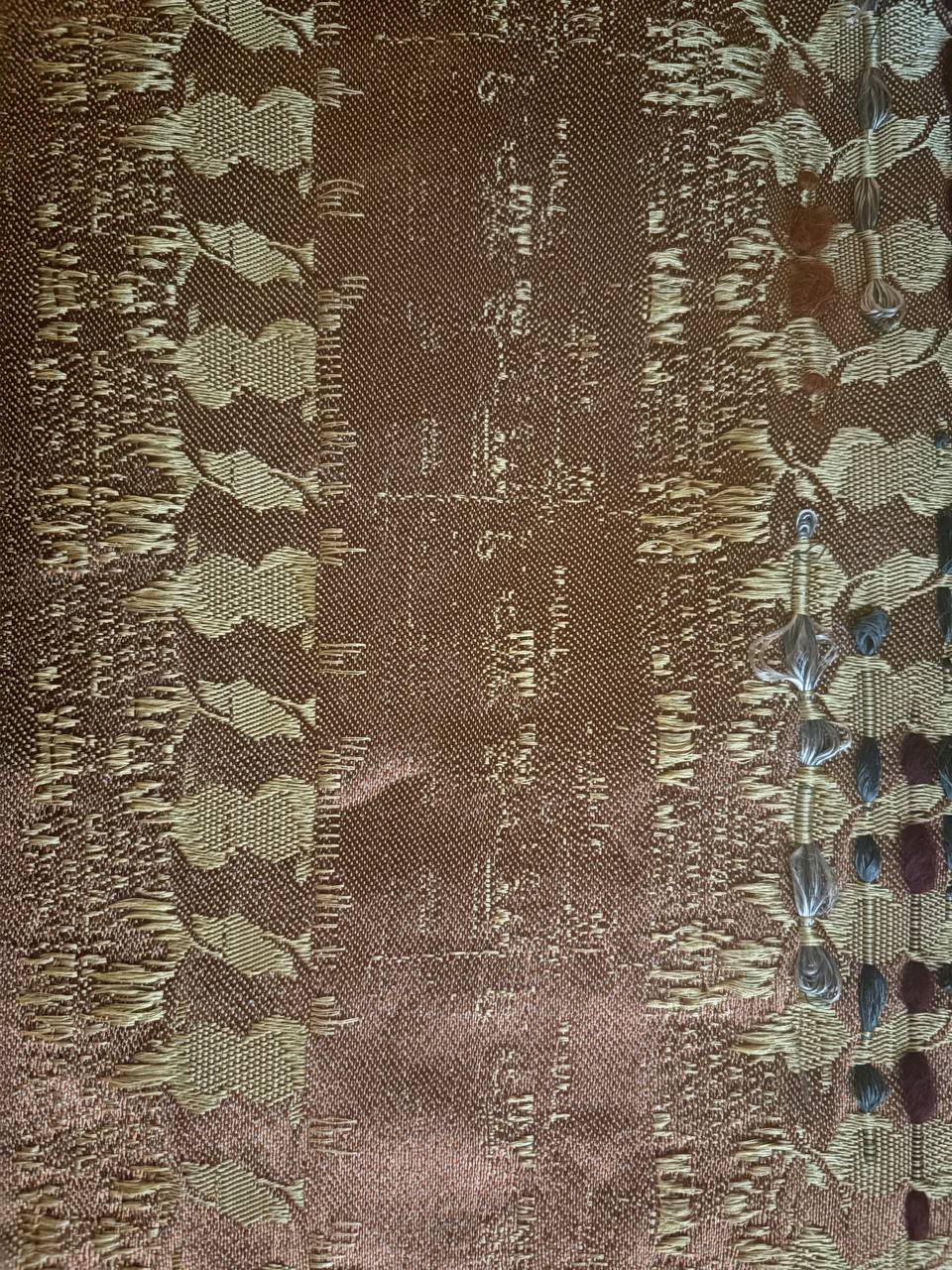
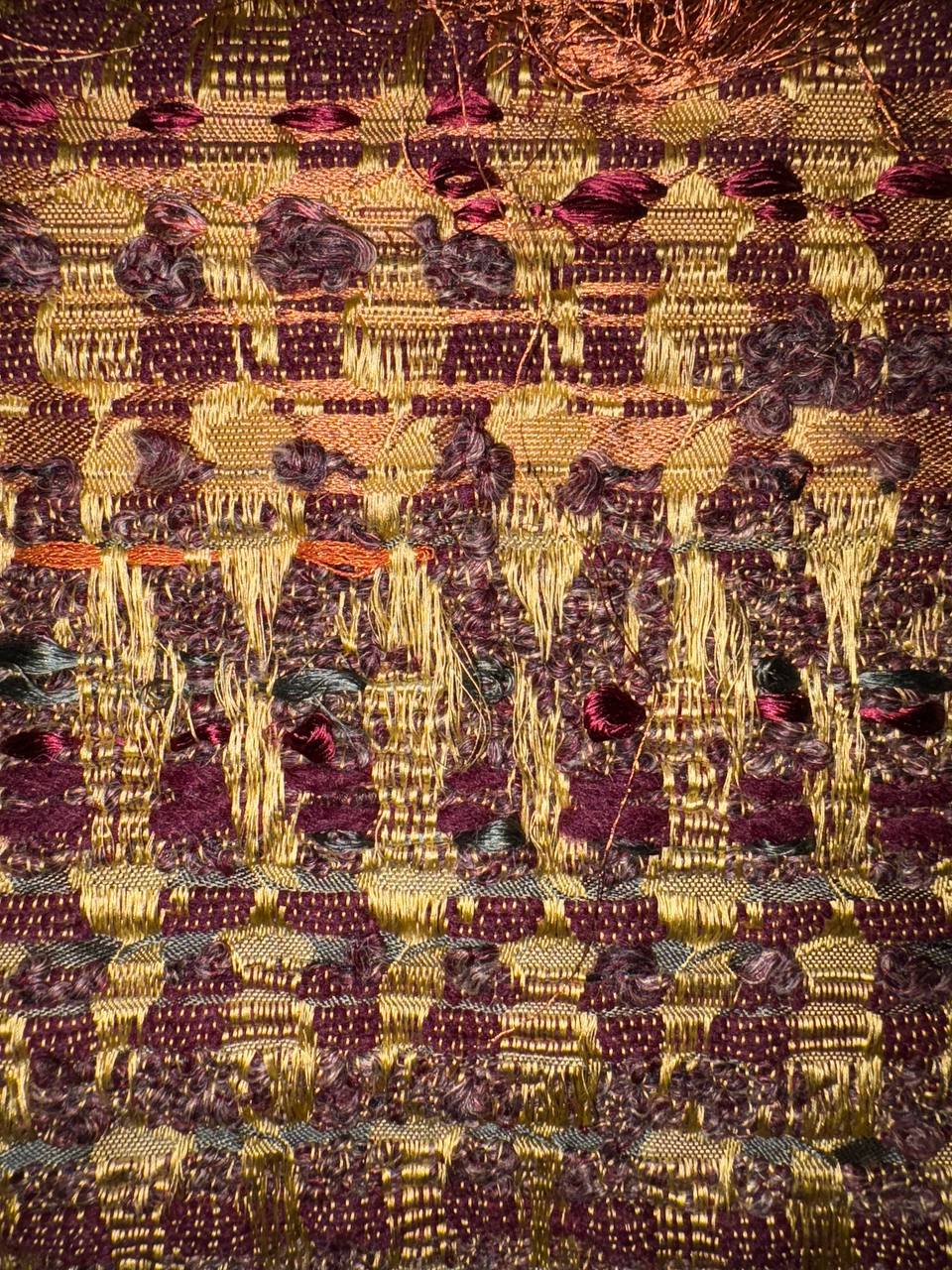
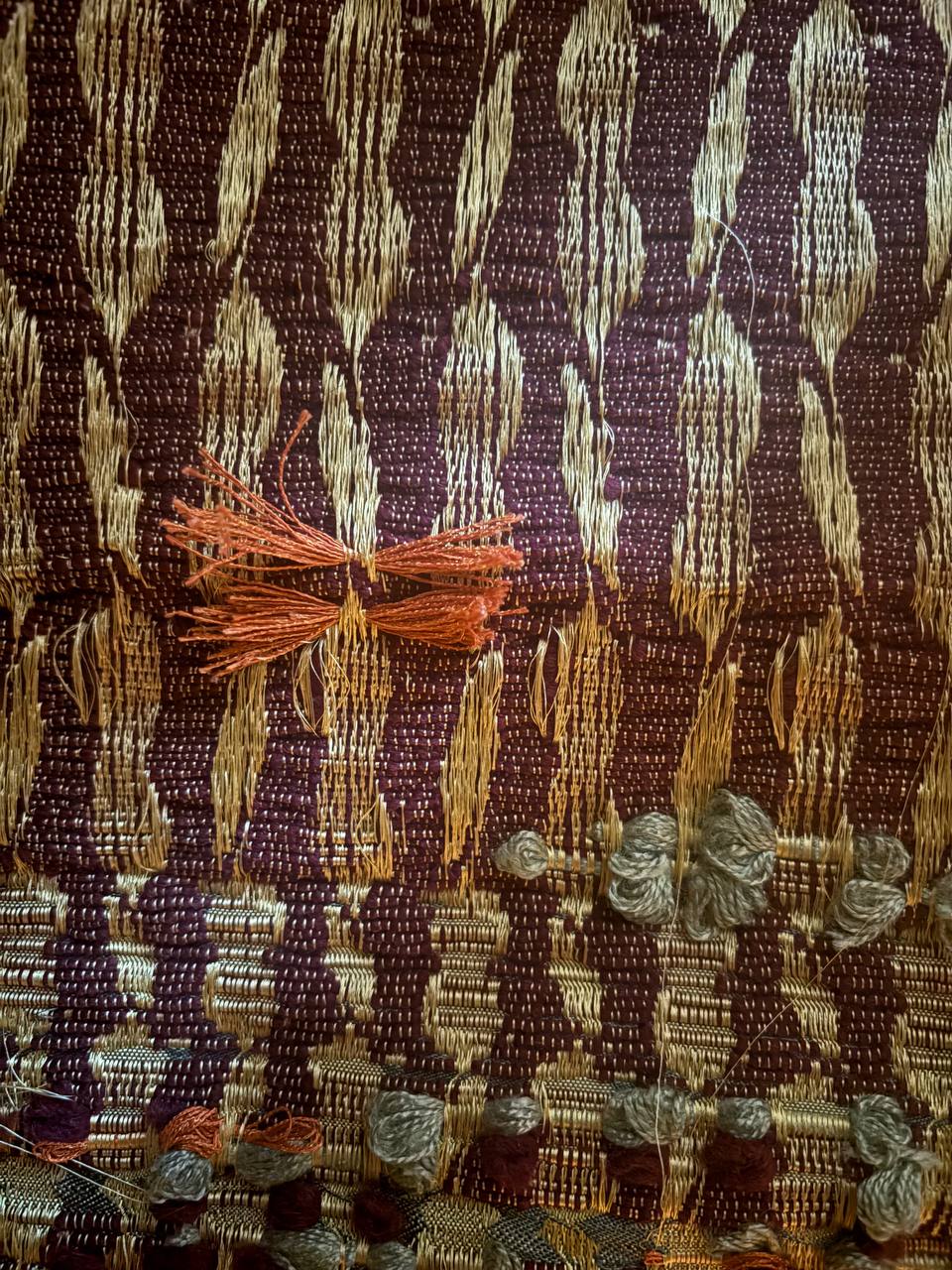
Archive of Errors reflects on the idea of perfection in textiles and on the role of error in craft production. Inspired by my time at the Fondazione Lisio, whose fabrics represent the summit of artisan mastery, the work questions the ideal of technical perfection that has historically defined the value of textiles — the flawless fabric, like the tapestry, has always been a sign of power.
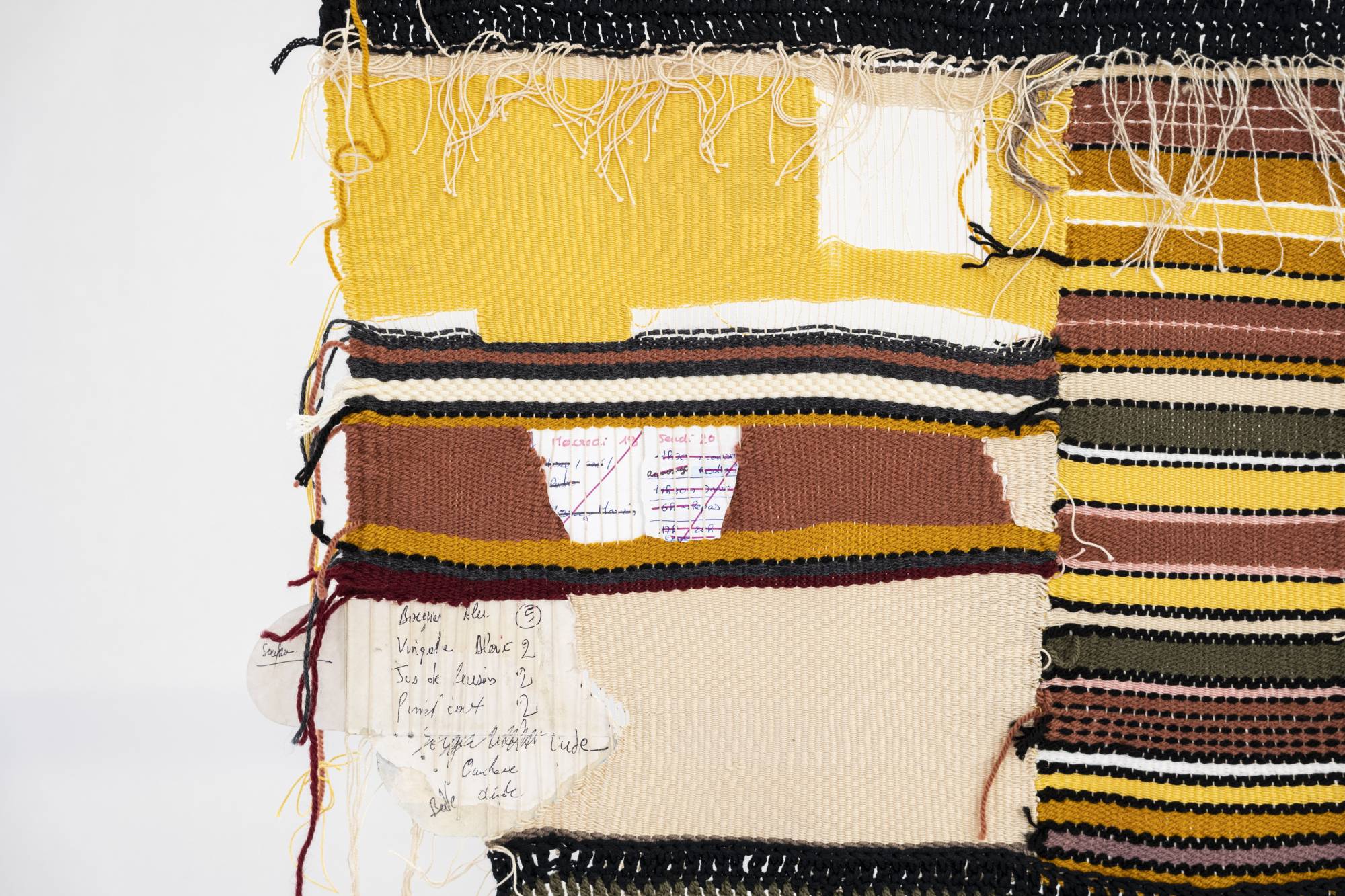
The series subverts this logic with Jacquard fabrics generated by chaos: unconventional punched cards, including cards discarded by the Foundation, mixed with uncontrolled patterns. Paper is the first medium of memory: Archive of errors preserves what is usually removed or forgotten, the error. In a world that hides failure, the series exhibits it, celebrates it and keeps it.
02 — 2026
Mother Earth Water Earth
With Michele Ciacciofera · MUMO – Museo Montone, San Francesco cloister · with the Civitella Ranieri Foundation and BUILDING, Milan
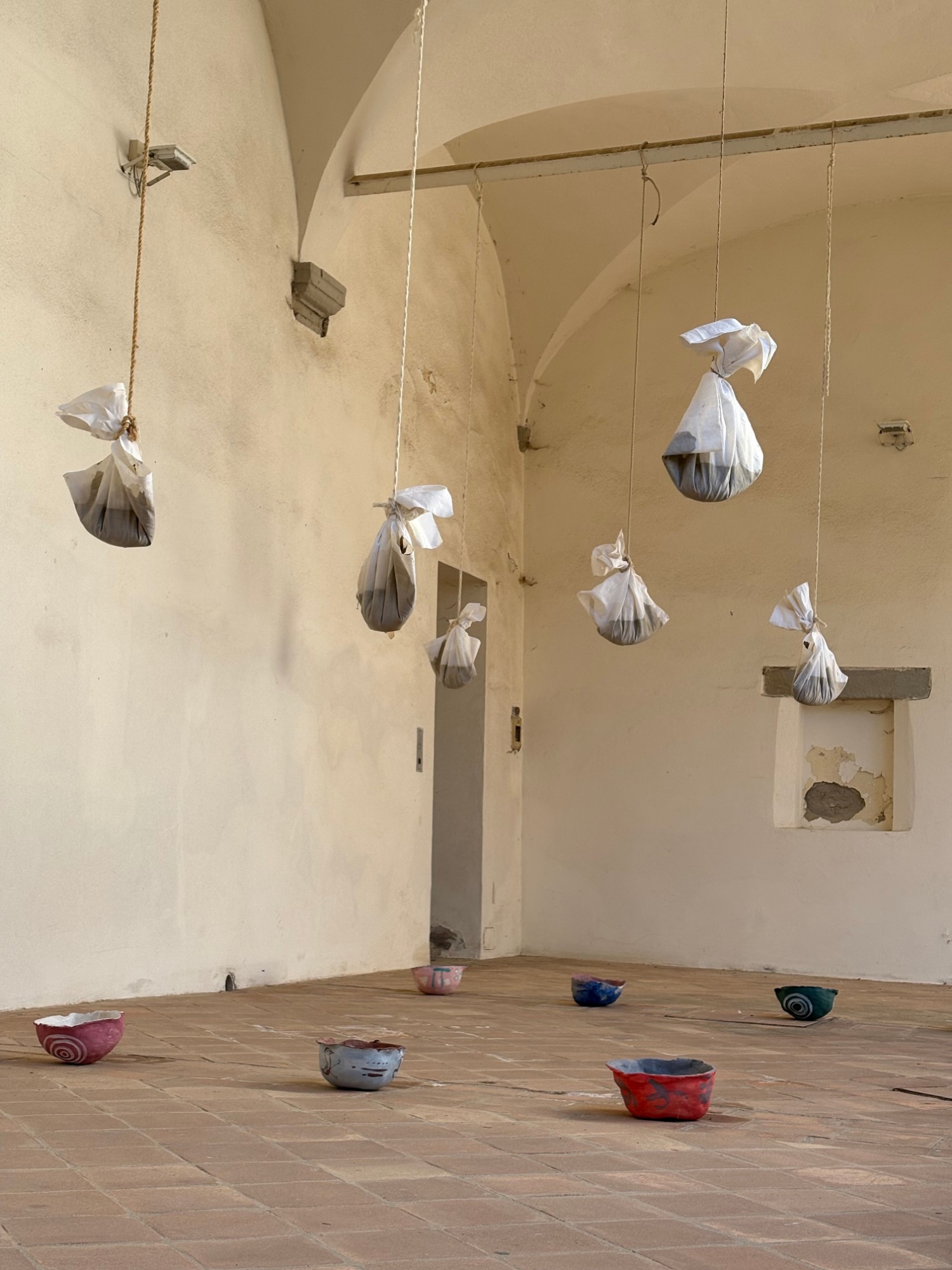
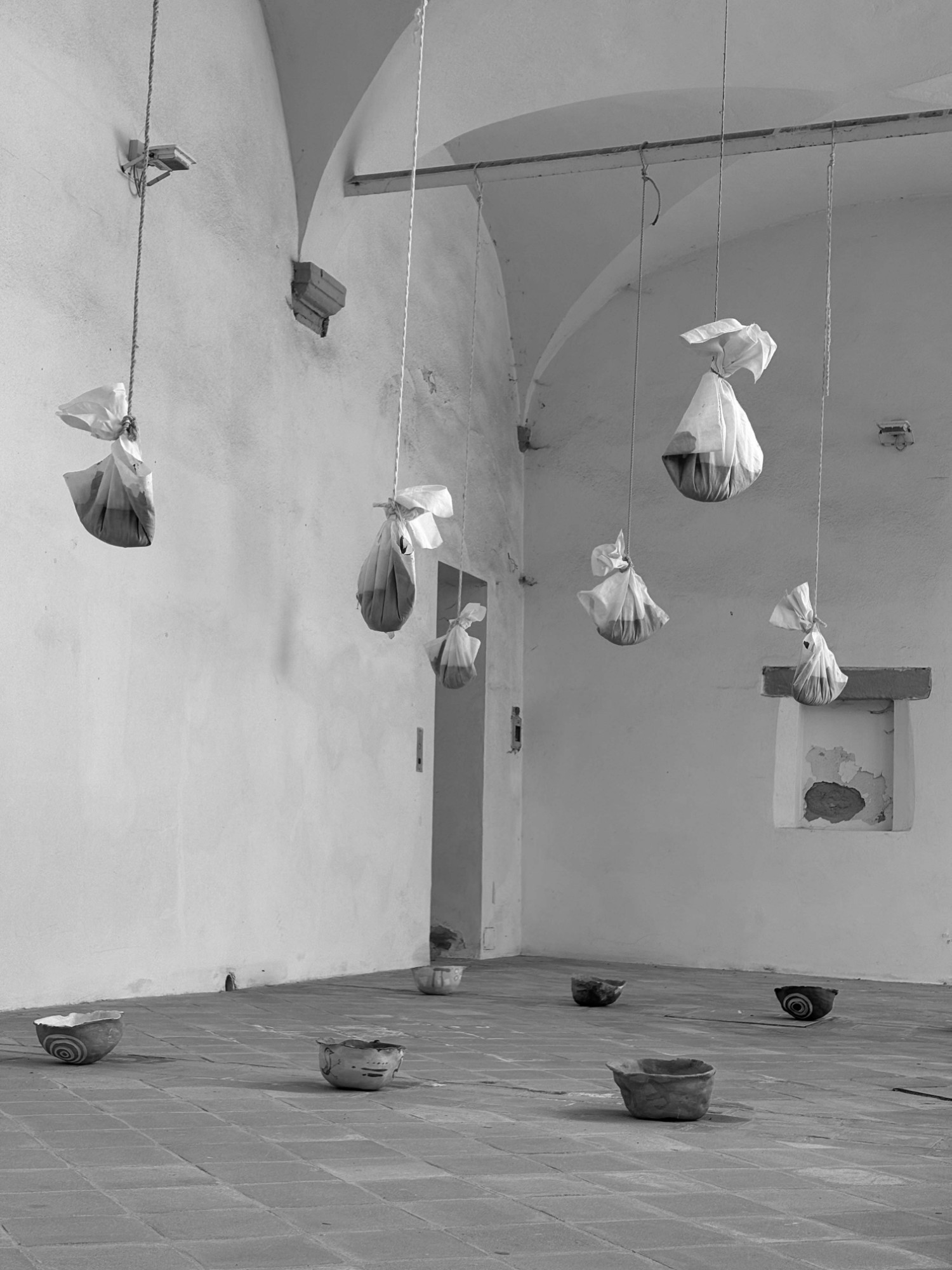
An installation centred on two archetypes of life, water and earth — primordial, intimately connected elements that become a metaphor for the biological, natural and human cycle — and on one of the most dramatic urgencies of our time: the climate and water crisis.
Natural fibre sacks filled with clay obtained from sifted local soil hang from the space. Water slowly filters through, drop by drop, marking an organic and ancestral sense of time. As it separates from the water, the material takes on bodily forms, while the water gathers in ceramic basins arranged in a circle, symbolic altars dedicated to the “memory of the earth”. A physical process becomes a political and poetic gesture.
03
Hems
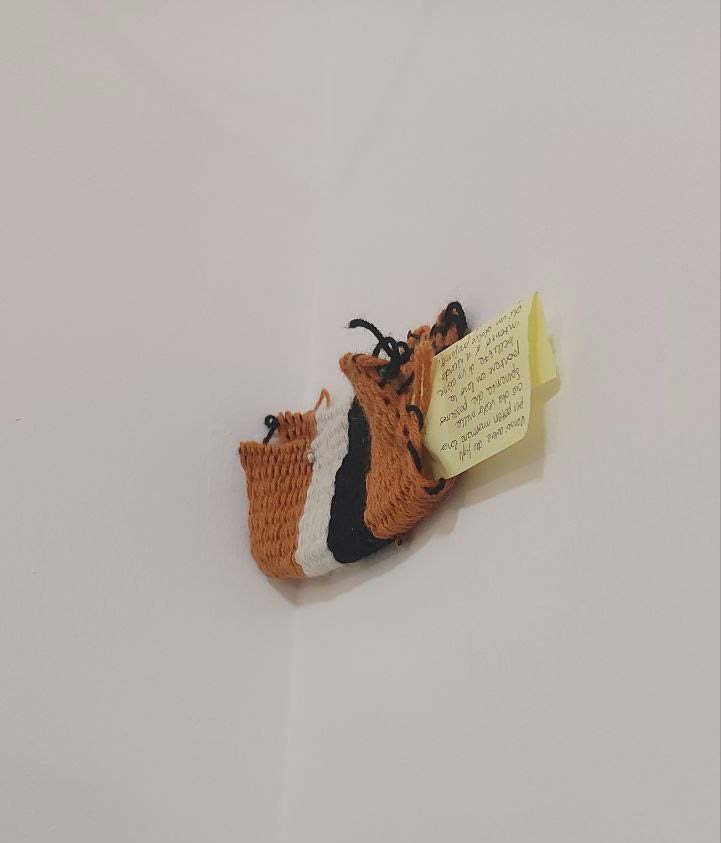
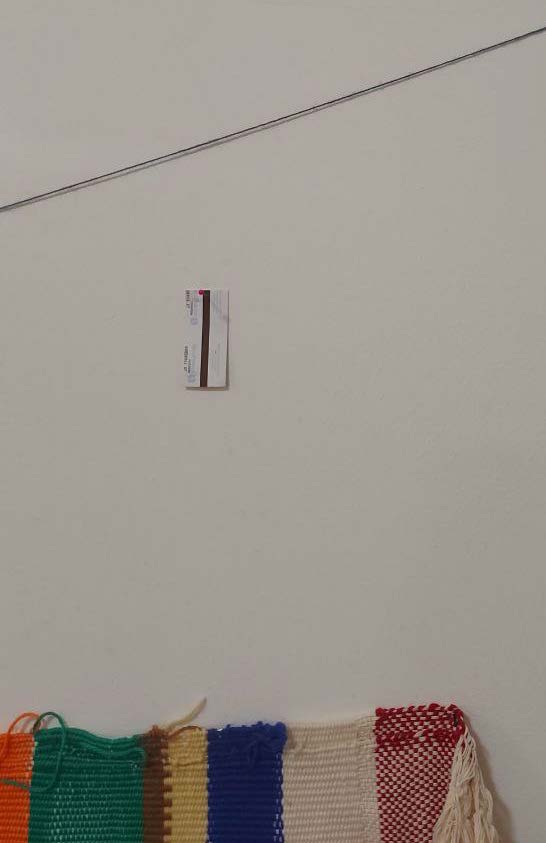
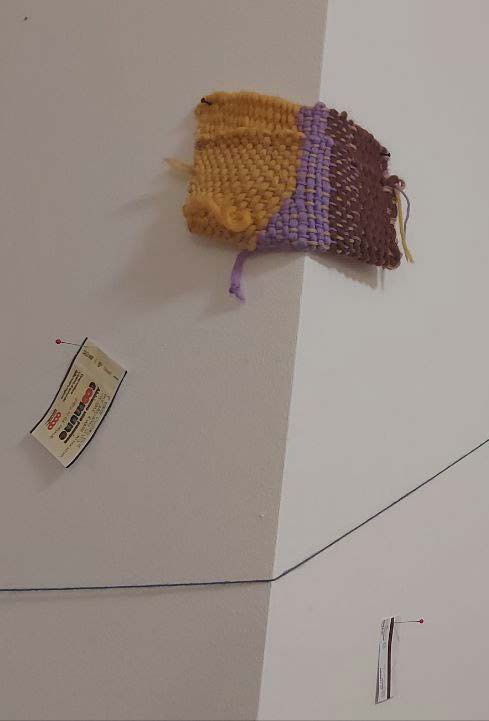
In many cultures, the hem of a garment is a symbolic boundary where stories, identities and messages are concealed. Among the Navajo, woven patterns along the edges of blankets told stories of clans and genealogy; vyshyvanka shirts concealed embroidery within their inner seams; during colonisation, many communities stitched their identities into collars, cuffs and hems.
The hem becomes a symbolic space in which to deposit what cannot find a voice elsewhere. Visitors are invited to write down thoughts, memories, secrets or desires, which together form a collective hem. The messages travel; they can be read, taken, replaced or enriched by new voices. A caress and a silent act of resistance: hemming / voicing the experience of grief, desire and care.
“It was the last film we watched together. I miss you sometimes. I hope you are happy.”
— Anonymous, Perugia, 13/09/2025
04
Placentas
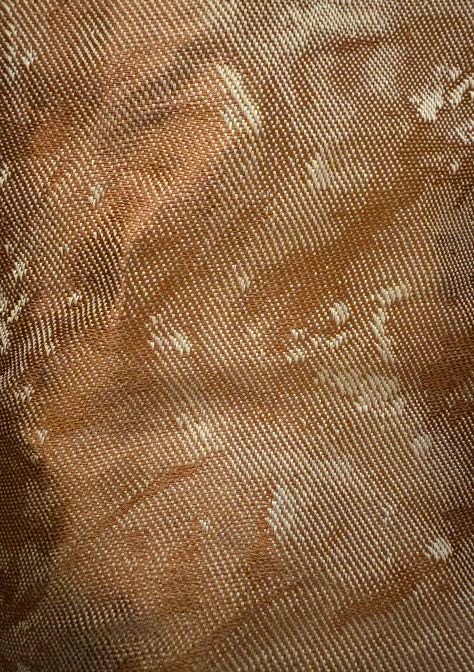
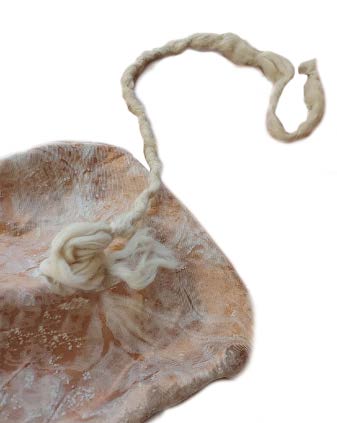
The series Placente (Empty Placentas) stems from the encounter between weaving and anthropological reflection. Created through research on the Takemura loom, it continues an investigation into the origins of the body, developed in collaboration with geologists around the Rochechouart meteorite crater. Meteorites, carriers of the building blocks of DNA, encountered the Earth as a generative body, acting as an “earthen placenta” from which the first forms of life emerged. They became, in this vision, cosmic mothers.
Here, the “woven placenta”, an organ that welcomes, nourishes and protects, is empty, devoid of seed. Made of wool, silk and copper — materials whose fibres offer protection from the cold and conduct energy/life — these works are symbolically dedicated to the Government. These placentas question the role of women in a society that still too often reduces them to their reproductive function, going so far as to consider an increase in birth rates an essential criterion for judging the quality and effectiveness of a government.
Giving life means so much more. And, above all, the possibility of giving life depends on circumstances that cannot be measured by any statistical data.
The Placentas series does not offer an answer, but becomes a gesture: weaving with love even that which cannot generate, restoring dignity and power to absence.
05
NEWS!
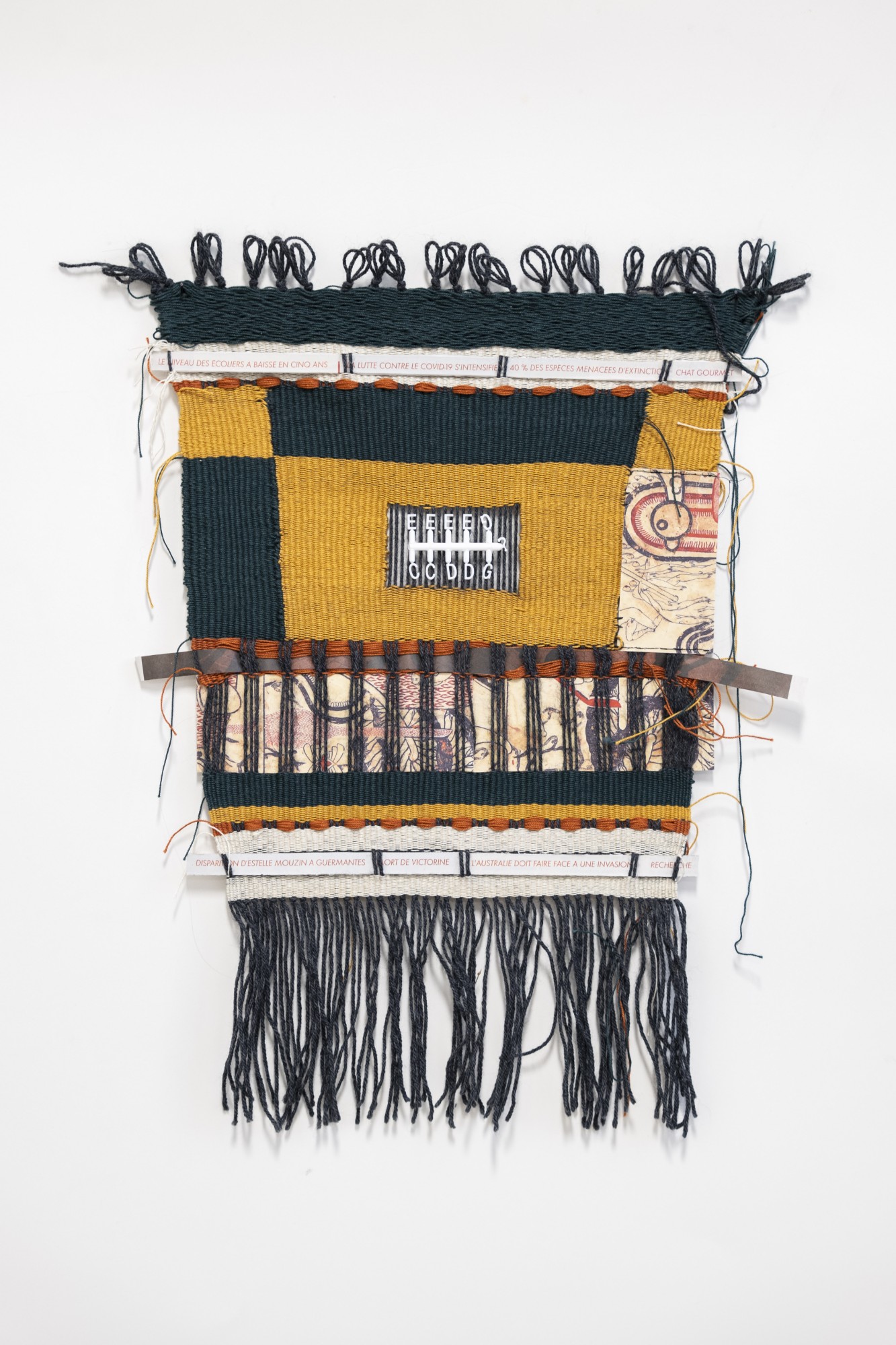
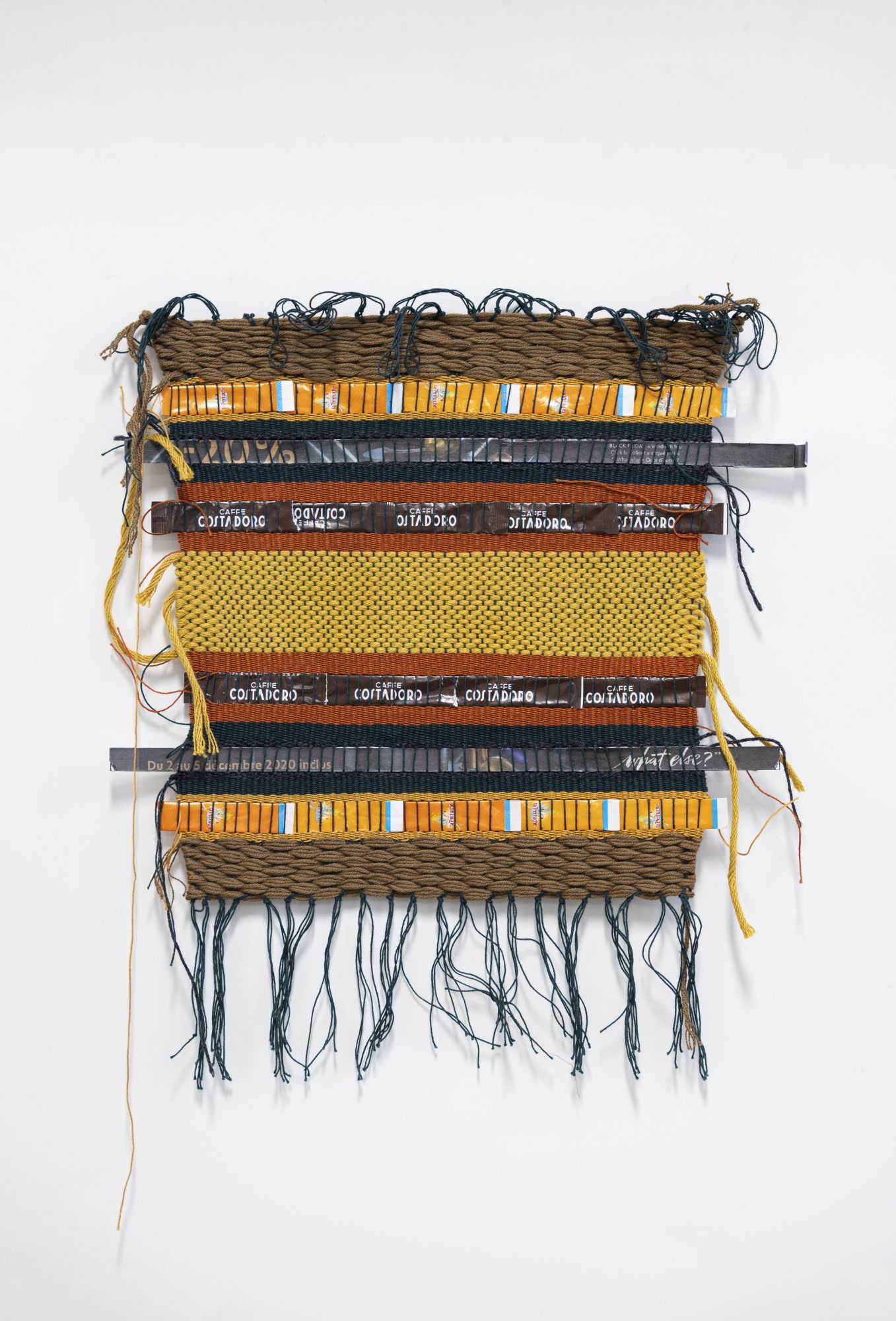
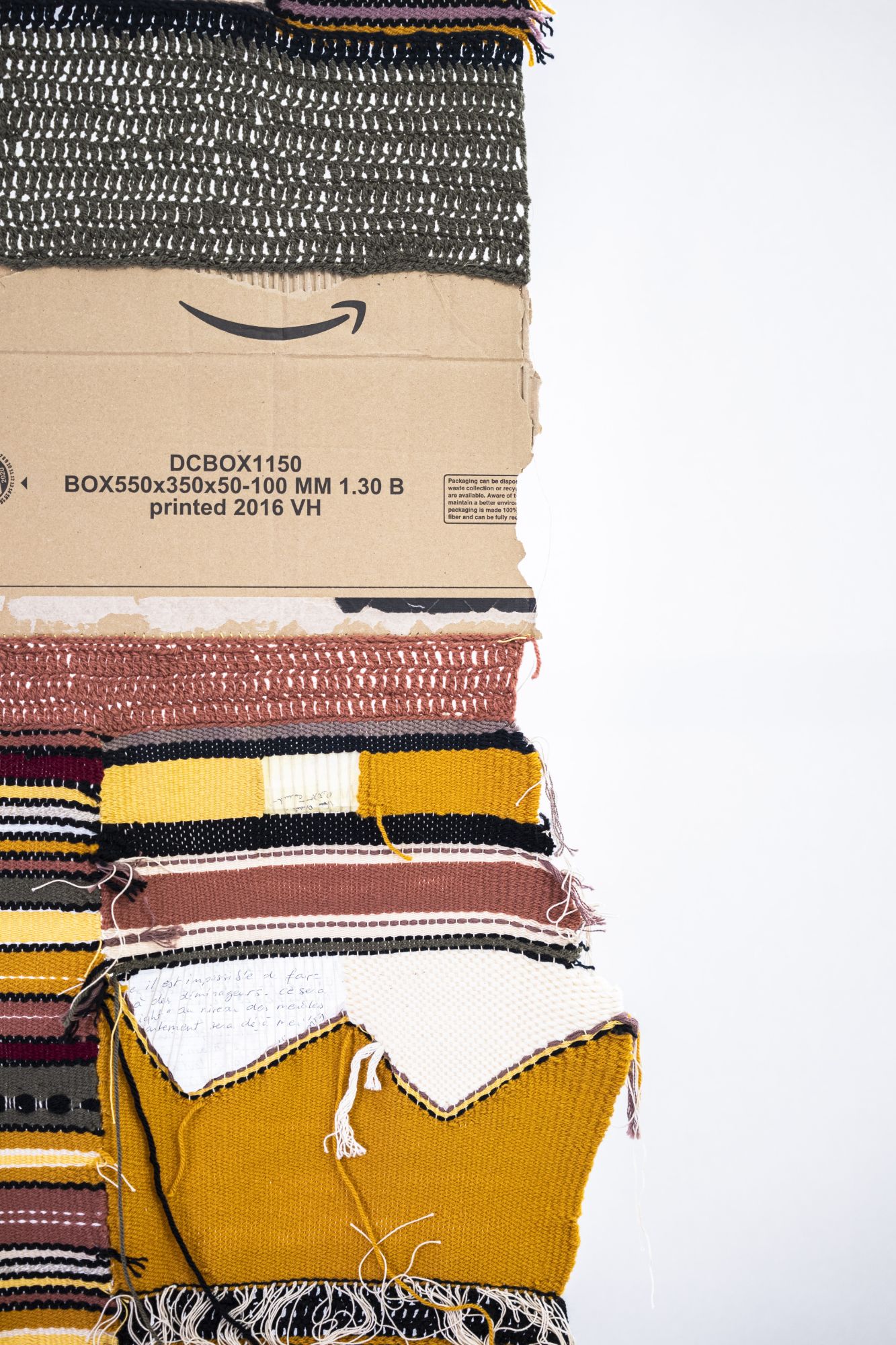
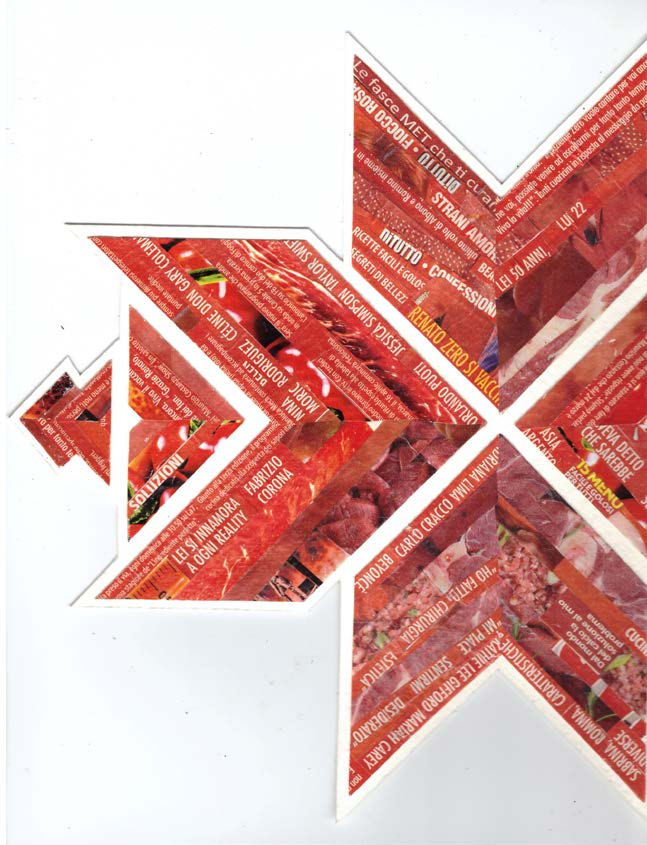
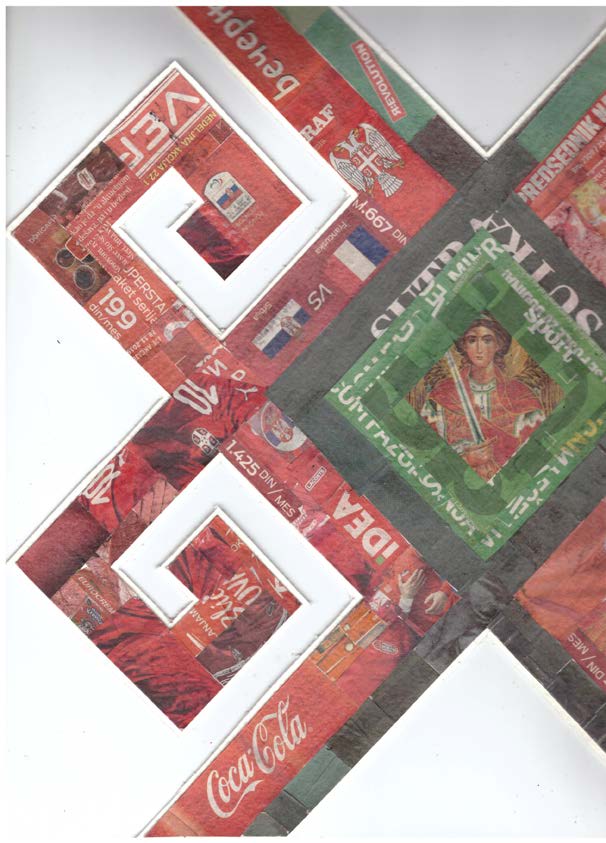
The News! series is composed of images cut from newspapers and selected for their colours. These become the weft threads of a contemporary tapestry, assembled into geometric patterns that evoke the traditional weaving motifs of each nation. The Serbian daily newspaper, for example, is printed in the national colours and carries a chromatic language that tells the story of an entire culture. The newspaper thus becomes a reflection of everyday life, changing colour from one country to another: a political and social flag that accompanies us every morning.
In the past, tapestries narrated the stories of families, celebrations and saints. Today, the stories of the world travel online and through newspapers. Here, paper becomes the raw material, the only material that can be physically touched and transformed.
In every new country, I collect local newspapers and advertisements and compose them into tapestries: an intercultural chronicle of our time.
06 — Adam-ah
Witnesses of Time
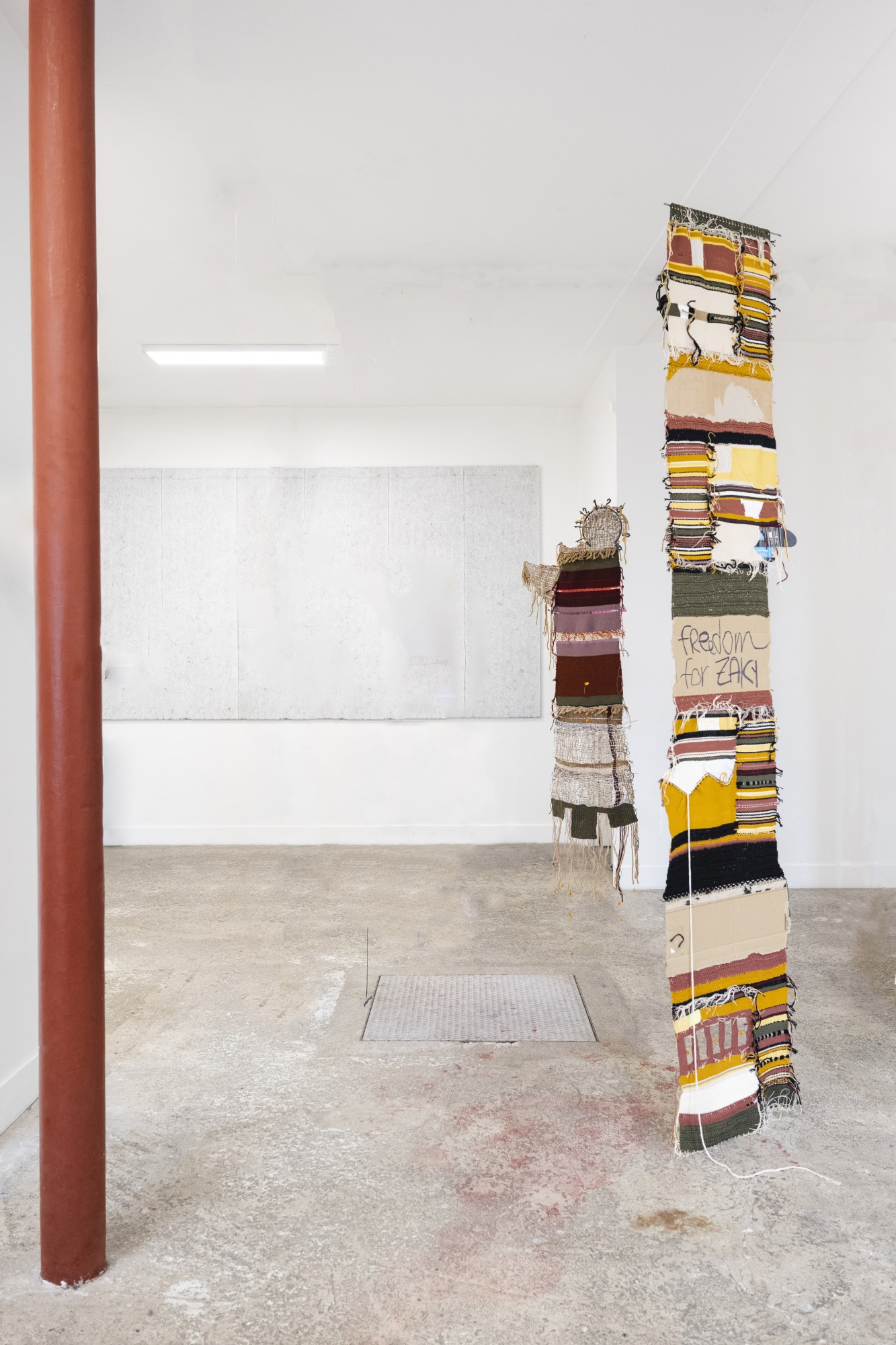
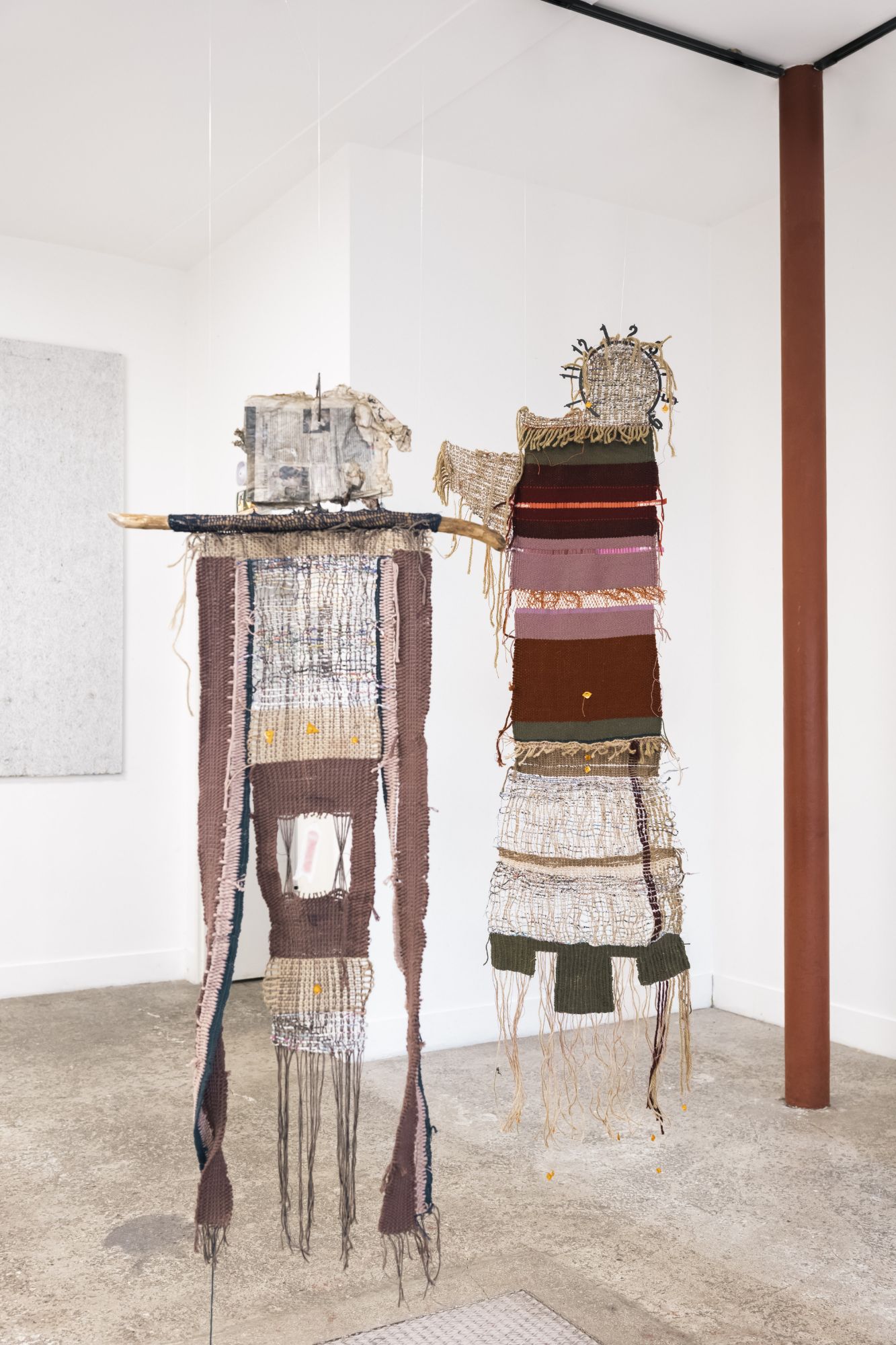
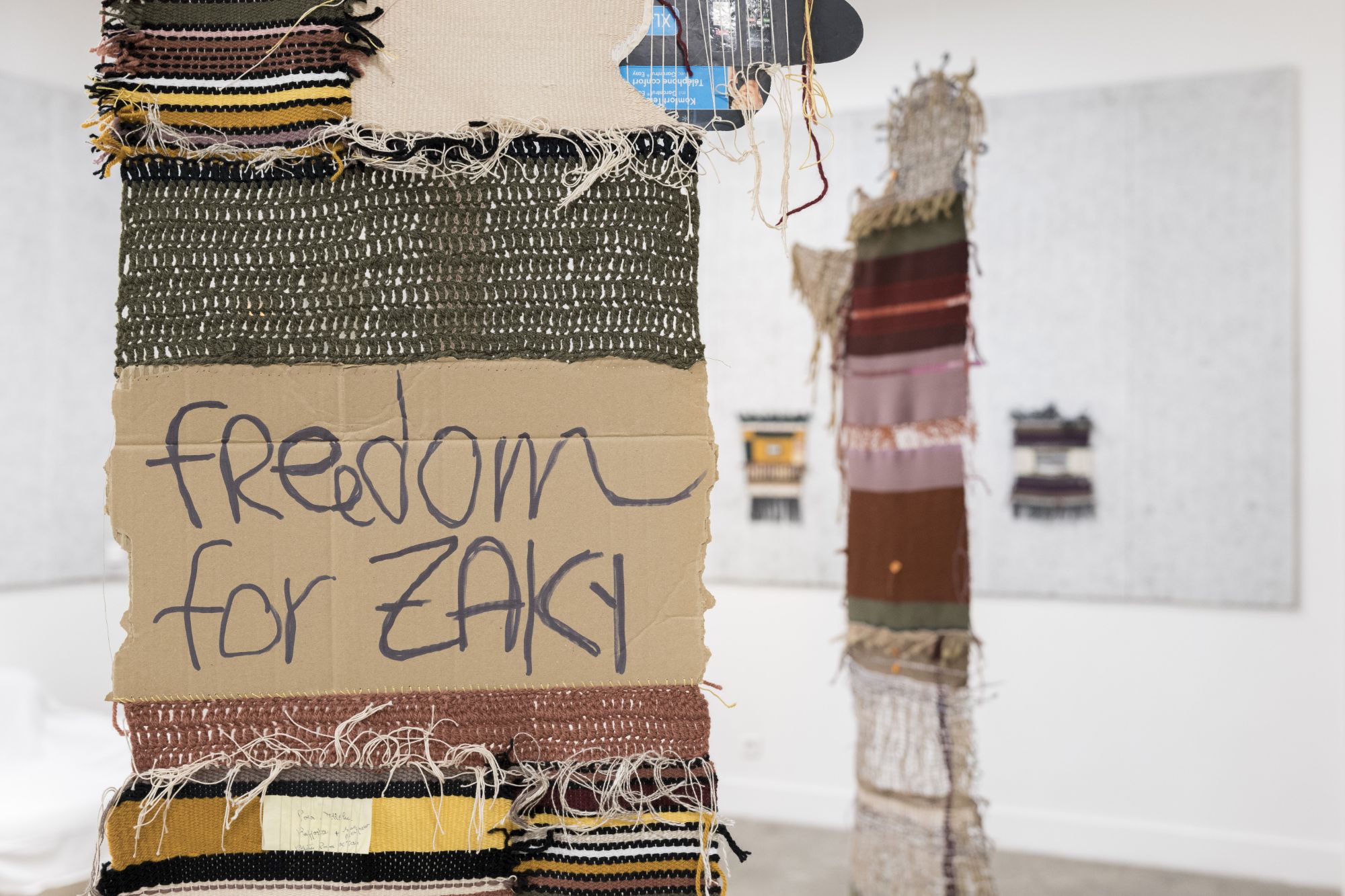
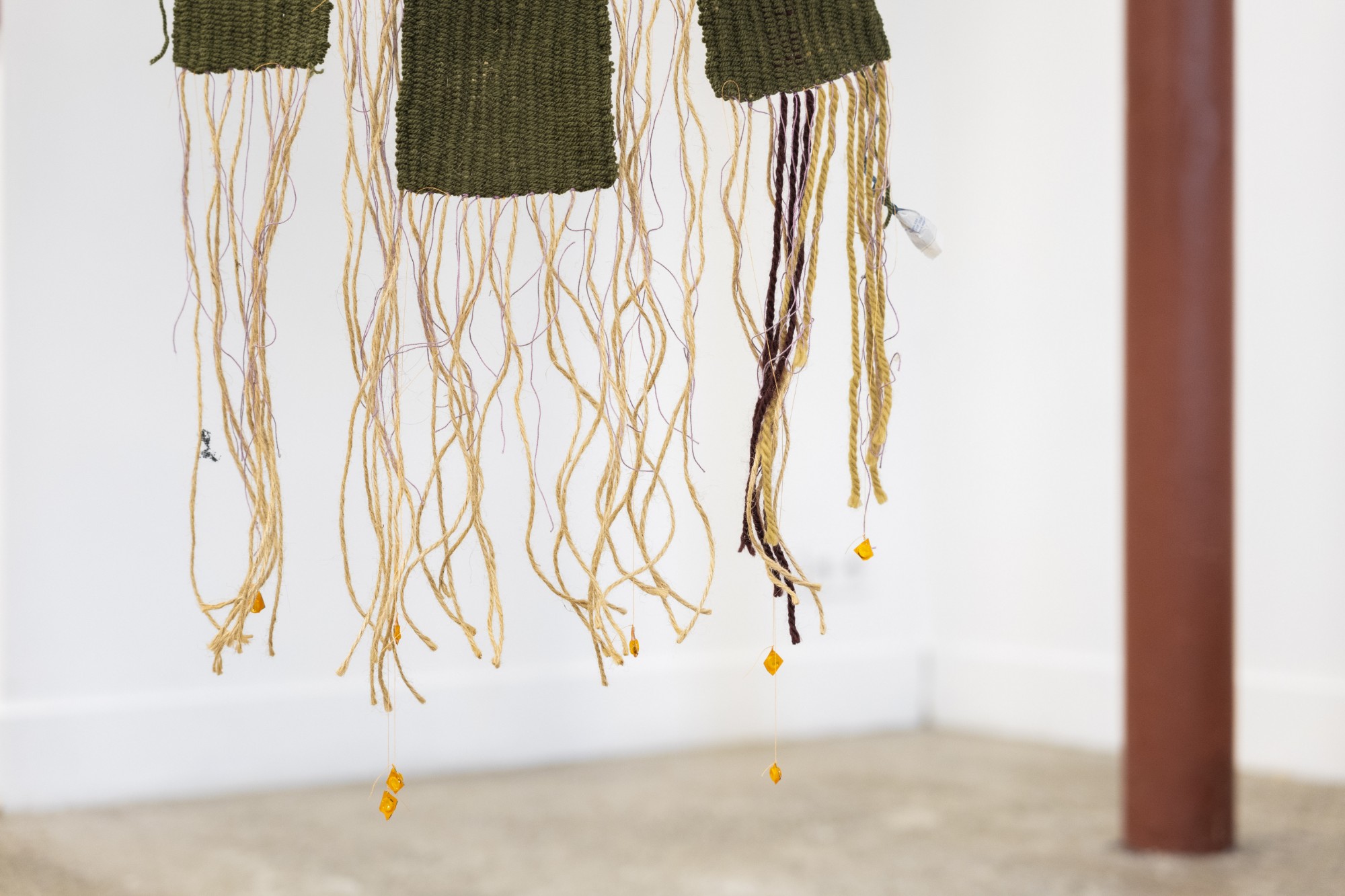
The Witnesses of Time is a series that gathers stories into woven structures, like nets holding fragments of life. Paper and wool threads intertwine, enveloping everyday objects. Working on a rudimentary loom, I weave fibres that record my own presence, as well as that of the people I encounter. The movement of the shuttle marks the rhythm of an inner dialogue.
Suspended like streamers, the works evoke both the language of Arte Povera and the scarecrows of ancient and contemporary civilisations. They hold fragments of the past and traces left behind by anonymous passers-by who, through objects lost along my path, offer me a trace of time, their time. The fibre becomes a “witness” to urban life and collective memory.